

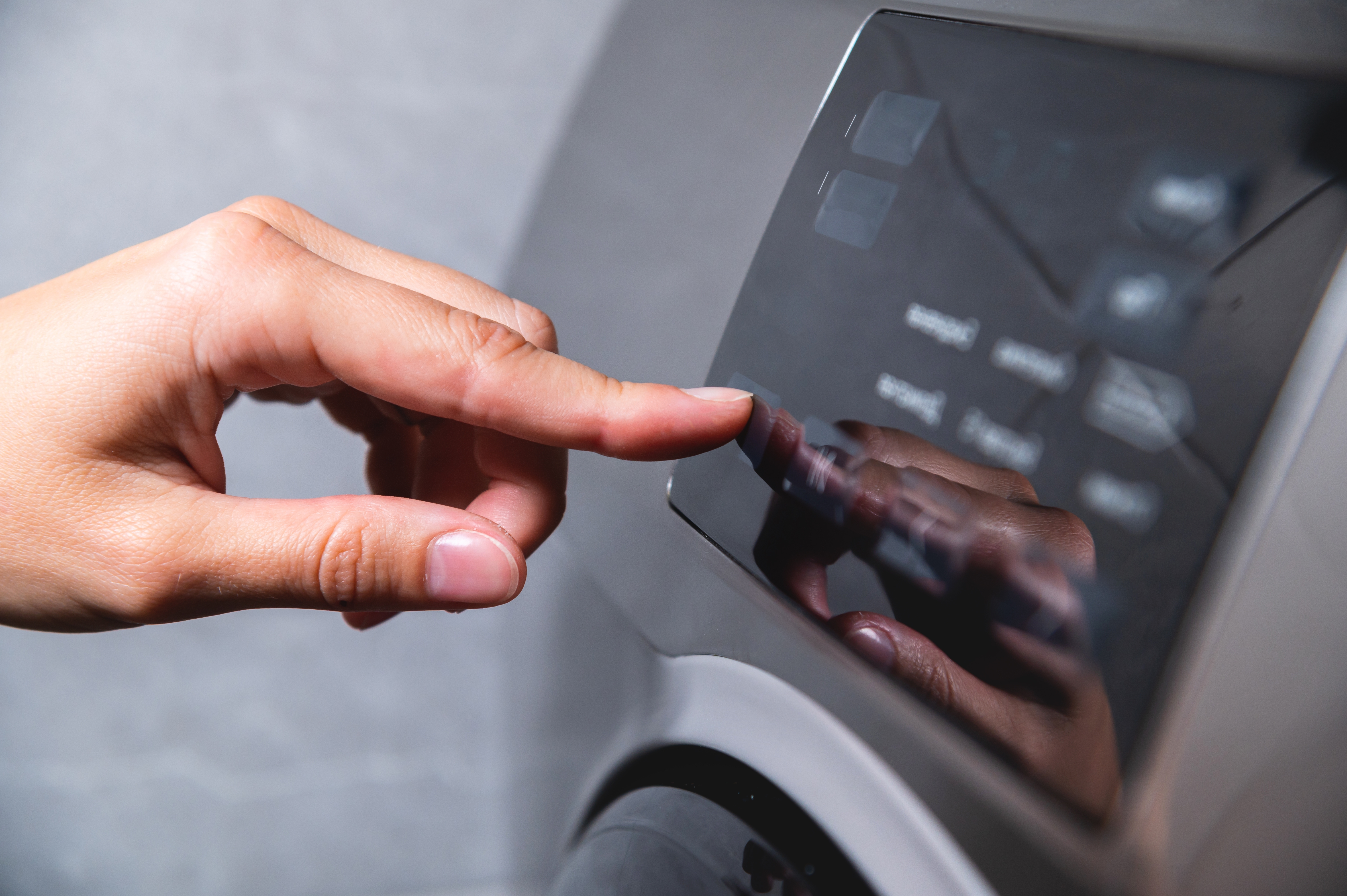
Smart appliances are expected to do more while blending naturally into the home. Consumers want connected features, efficient performance, and operation that feels refined.
A washer that shakes during a spin cycle or a refrigerator that produces a noticeable hum can quickly undermine the user experience, even when the technology inside performs as intended.
Managing energy inside compact appliance designs
As appliance interiors become more crowded, controlling sound, vibration, and heat becomes more difficult. Motors, pumps, sensors, control boards, and wiring must share limited cabinet space, creating multiple paths for energy to move through the appliance.
Motor vibration can cause a metal panel to radiate sound, while insulation may affect the airflow needed for cooling. Effective material selection begins with identifying the source and tracing how that energy travels.
In this article, we will cover:
- How sound and vibration move through smart appliances.
- Why thermal conditions and moisture exposure affect material selection.
- When 2D die-cut foam or custom molded foam may be appropriate.
- What a motor-driven equipment project can teach appliance engineers.
Start by identifying the energy path
Smart appliances contain several possible sources of unwanted sound and movement.
- Motors rotate.
- Pumps move water.
- Compressors cycle as demand changes.
- Fans force air through vents and compact passages.
The source is only the beginning. Engineers must also understand how that energy reaches the appliance exterior.
A useful evaluation follows four steps:
- Locate the source. Identify the component or panel producing the issue.
- Trace the path.Determine whether the energy moves through the air, mounting system, frame, or cabinet surface.
- Identify the receiver. Consider where the consumer hears or feels the result.
- Select the treatment. Match the material and geometry to the energy path.
This process helps distinguish an airborne sound problem from a structural vibration issue. The two may sound similar to the user, but they often require different solutions.
Controlling airborne sound
Motors, compressors, pumps, and fans can produce a wide range of frequencies. Users may hear a steady hum, a sharper electrical tone, or airflow moving through ducts and openings. ariable-speed components make the acoustics less predictable. A refrigerator compressor will sound different at different speeds. A washer may produce one tone during a slow cycle and another during a high-speed spin.
Open cell acoustic foams can absorb sound within the enclosure before it reaches the appliance exterior, depending on:
- The frequencies that need to be controlled.
- The thickness and placement of the foam.
- The amount of open space around the material.
- The position of vents and other sound paths.
- Environmental exposure inside the cabinet.
Material selection will be determined by the operating environment. A dry compartment may allow one construction, while a humid area near a dishwasher pump or washing machine assembly may require greater moisture resistance.
Reducing vibration and panel resonance
Mechanical energy can move through mounts, brackets, frames, and fasteners.
Once that energy reaches a broad metal or plastic panel, the panel may begin to resonate. The result can be buzzing, rattling, or vibration that transfers into nearby cabinetry or flooring.
Different solutions serve different purposes:
- Isolationseparates a vibrating component from the surrounding structure.
- Damping reduces resonance within the panel itself.
- Absorption controls sound after it enters the air.
An effective solution may use one method or combine several. The decision depends on where the energy begins and how it reaches the exterior.
Laundry equipment is difficult because the operating forces change as clothing and water shift within the drum. Kitchen appliances may face steadier vibration from compressors, pumps, and fans.
Accounting for heat and environmental exposure
Connected appliances place sensors, displays, controls, and communication hardware close to mechanical components. Motors, compressors, power supplies, and heating systems can create localized hot areas within the cabinet.
Acoustic materials can influence those conditions. Foam placed around a component may alter cooling airflow or reduce the available space for ventilation.’
For that reason, engineers should review acoustic and thermal requirements together.
Important questions include:
- What temperatures will the material experience?
- Will the area be exposed to humidity or condensation?
- Does cooling air need to pass through or around the treatment?
- Are there flammability or durability requirements?
- Will the material experience repeated thermal cycling?
Choosing between flat and custom molded foam
Material selection includes both the foam formulation and the way the finished part will fit into the appliance.
Flat foam
2D die-cut foam is well suited to appliance walls, doors, cabinet panels, and other accessible surfaces. It can be die-cut or contour-cut to match the available space and may include adhesive backings, facings, or laminated layers based on the application.
A 2D die-cut solution may be appropriate when:
- The treatment area is flat or moderately contoured.
- The appliance design may require future revisions.
- Production volume does not support custom molding.
POLYDAMP® acoustic foams an help absorb airborne sound inside an appliance enclosure. Vibration damping materials may also be applied to metal or plastic panels that are prone to resonance.
Custom molded foam
Complex internal assemblies may be difficult to address with flat die-cut parts. Motors, pumps, compressors, blowers, and wiring systems often create irregular spaces where several separate foam pieces would be needed.
POLYFORM® custom molded polyurethane foam is shaped around the component and the available internal geometry. Depending on the application, one molded insert may provide acoustic absorption, component support, cushioning, or vibration isolation.
A custom molded solution may be appropriate when:
- Several die-cut parts would otherwise be required.
- Gaps between flat pieces create sound paths.
- The internal geometry is complex.
Openings and airflow paths may also be incorporated into a molded part when cooling is required.
An appliance may use POLYFORM® around a complex motor assembly while POLYDAMP® die-cut materials address nearby cabinet panels. Our experts work with OEM engineers to determine the combination that best supports the appliance’s performance and production requirements.
Lessons from motor-driven equipment
Polymer has helped manufacturers address similar challenges in several types of motor-driven home equipment and appliances. Here is one that involved a noisy vacuum cleaner design.
Commercial vacuum cleaner
A commercial vacuum manufacturer needed to reduce disruptive motor noise while meeting UL 94 V-0 flame-resistance requirements.
After reviewing the acoustic data, we recommended several foam types and thicknesses for customer testing. Melamine foam was ultimately selected for the motor housing to absorb airborne sound.
The motor was also mounted with UL 94 V-0 isolating grommets from Polymer to reduce the amount of vibration transferred into the surrounding structure.
Build a quieter smart appliance with Polymer
Sound, vibration, and heat are easier to address while the appliance design still has room to evolve. However, wherever you are in the design and development process, our team can help. We will work with you to identify the challenge, compare material options, and test potential solutions.
Bring us your appliance design challenges, and let’s engineer a quieter home together.
Talk to an Expert about an energy management solution for your next smart appliance design.