

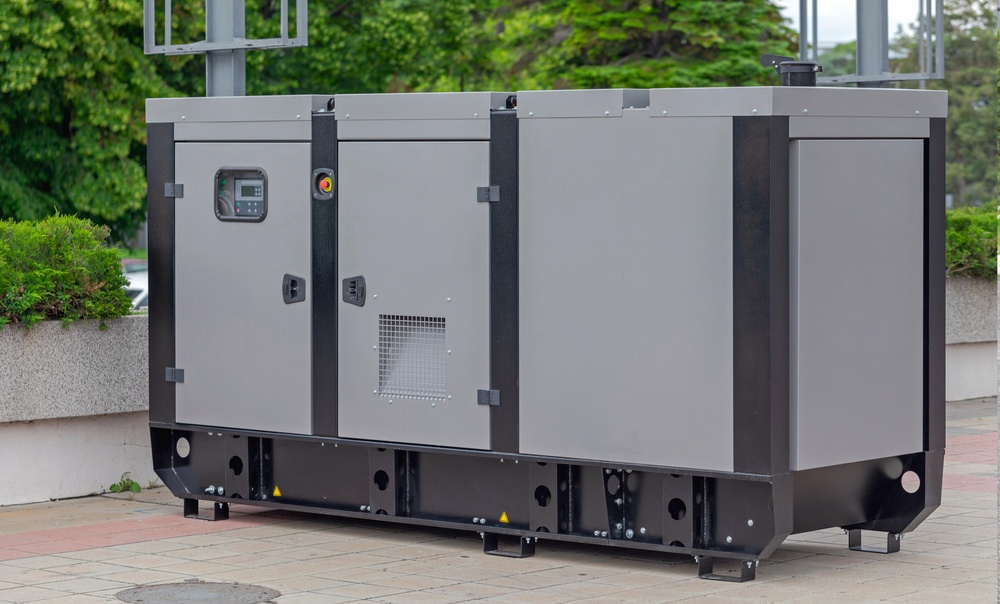
 Heavy-duty power generation equipment is engineered to move large volumes of air for cooling and combustion. When housed within metal enclosures, their powerful motors and cooling fans generate significant noise, creating conditions that can be difficult to work around and may impact operator health.
Intake plenums, service doors, and hatches are essential openings that provide airflow and facilitate maintenance access. When these openings are not properly managed, however, they also become escape points for noise, creating literal headaches for operators through disruptive sound levels and heat-related performance challenges.
In this article, we’ll explore these challenges and identify solutions Polymer specializes in that help manage noise and heat while maintaining equipment performance and operator safety. Read on to learn more about the following:
- Why plenums and service hatches are vulnerable to noise and create acoustic weak spots
- How acoustic foams can help eliminate the line of sight to prevent sound waves from escaping
- Why barrier composites are used to block vibrations from reaching the service door
- Ways gaskets seal the noise and stop leaks from escaping through the cracks
At Polymer Technologies, Inc., we work directly with OEMs to address noise, heat, and airflow challenges by applying material solutions that seal the gaps left by traditional designs. First, let’s examine why balancing airflow requirements, service access, and operator safety remains such a persistent engineering challenge.
How to Ensure Airflow While Containing the Noise and Heat
Generator enclosures face competing demands that create difficult energy management challenges:
Airflow: These systems need high-volume air for cooling, combustion, and exhaust.
Access: Service doors and hatches must be easy to open for maintenance.
Containment: Noise and heat have to be kept inside the box to protect the operator.
The gaps in these units are energy leaks, which can cause sound and heat to escape. Traditional designs often enable airflow, but fail at absorbing the sound waves or blocking vibrations from creating a noisy environment.
Why Are Plenums, Hatches, and Doors Often the Failure Points?
The Plenum is an air distribution chamber that is usually a metal box. It can create a line of sight for noise, which means the sound of the engine or fan travels in a straight, unobstructed line directly to the operator’s ears.
Service doors and hatches are often the largest panels on a machine. They have to be movable for the operator to open, so they are usually thinner than the main frame. Without proper management, they act like drum skins, vibrating and amplifying the internal noise
How Does Polymer Help Solve These Acoustic Issues?
To solve these problems for power generation equipment, Polymer focuses on three different material solutions that work together to plug the gaps caused by constraints in the equipment design.
Acoustic Foams for Maximum Absorption
When sound waves enter a plenum or louver, they reflect off hard metal surfaces and gain energy. We offer a variety of POLYDAMP® acoustic foams made from melamine, polyurethane, and hydrophobic foams to help absorb this energy.
For many power generation applications, standard flat sheets of acoustic foam are the best solution. These sheets are incredibly effective at lining the interior of plenums and cabinets to absorb noise before it reaches the exit. The type of open-cell foam required will depend on the specific environment:
Melamine foam (PMF) is extremely lightweight and fire-resistant for strict compliance for intake plenums.
Hydrophobic melamine foam (PHM) is best for outdoor enclosures where moisture is a constant threat.
Polyurethane foam (PAF) provides durability for internal walls against constant motor vibrations and offers a wide range of sound absorption.
By strategically lining the air intake with acoustic foam sheets, direct line-of-sight paths for sound are disrupted, forcing sound waves to interact with the foam rather than escape the intake. The foam’s open-cell structure dissipates that acoustic energy as small amounts of heat.
Custom Foam Options for Complex Applications
When a unit has complex internal geometry that standard flat sheets can’t support, our PMP division offers custom molded polyurethane foam options. POLYFORM® products provide a seamless fit in tight corners, ensuring every square inch of the plenum or other gap area is managed effectively.
Barrier Composites for Blocking Sound and Vibrations
While foam absorbs airborne sound, it isn’t heavy enough to stop a metal door from vibrating. Barrier composites block sound transmission from passing through. Our line of POLYDAMP® acoustical barrier materials are easy to install and block a broad frequency range.
POLYDAMP® Acoustical Barrier with Absorber (PABA) is a barrier composite consisting of an absorber foam with optional film facing, a loaded vinyl barrier, and a urethane or melamine foam decoupler layer that decouples the vinyl barrier from the metal.
When applied to the inside of a service hatch or door, the composite adds weight to stop the door from vibrating along with the motor, ensuring the door is no longer the loudest part of the enclosure.
Gasketing for Closing the Final Gaps
The most advanced foam and barrier treatments are useless if sound can leak through the cracks. In acoustics, this is known as flanking. A gap representing only a small portion of a door’s surface area can allow a significant percentage of the noise to escape.
Our POLYTECH® line of gasketing materials made from an array of polymers can help increase your energy efficiency and reduce acoustical leaks.
They can be applied to pipework, which is a significant source of leaks and gaps. Gaskets are also used to create an airtight seal when a door or hatch is closed to eliminate acoustical weak spots at their edges.
Controlling Thermal Leaks within the System
While noise is the most obvious leak, effective energy management must also address thermal control. In power generation, unmanaged heat can be just as disruptive as unmanaged noise. Our materials provide benefits here, too, to enhance performance, longevity, and safety.
Preventing Short-Circuit Airflow: When gaskets, service doors, or plenums have gaps, pressure differentials can pull hot exhaust air back into the intake path. This re-ingestion forces the cooling system to work harder to maintain safe operating temperatures, increasing fan energy consumption and accelerating engine wear..
Lowering Skin Temperatures: Large metal enclosures can radiate thermal energy to surrounding areas. By lining service hatches and panels with barrier composites and acoustic foams, engineers can reduce external surface temperatures and keep skin temperatures within safe limits for operators working near the equipment during operation.
Speak with the Experts to Keep the Noise and Heat Contained
An enclosure is only as strong as its weakest point. By focusing on the areas where leaks typically occur, Polymer Technologies helps OEMs deliver power generation equipment that is quieter, cooler, and more efficient. Contact us today to discuss your acoustic and thermal challenges so our engineers can identify the best combination of energy management solutions to meet your needs.