

 For OEMs and design engineers, product development is rarely a straight line. Acoustic performance falls short. Heat builds up faster than anticipated. Vibration creates durability concerns. Each adjustment can impact another system, making iteration both necessary and time-sensitive.
That’s where custom modeled foam prototyping becomes a strategic advantage.
By leveraging molded polyurethane foam early in the design process, OEMs and product development teams can rapidly test, refine, and optimize solutions for noise, vibration, and thermal management without delaying launch timelines or overcomplicating assembly.
In this article, we’ll cover:
- How custom molded polyurethane foam accelerates OEM product development.
- Why prototyping with molded foam improves acoustic, thermal, and vibration performance.
- How tunable density and geometry allow faster iteration during design validation.
- The advantage of moving from proof-of-concept to production-ready parts seamlessly.
- How Polymer’s collaborative PMP process reduces rework and shortens time to market.
Why prototyping matters
Modern equipment, whether in medical, transportation, military, or heavy-duty industrial markets, demands tighter tolerance and higher performance expectations. Engineers are expected to solve multiple environmental challenges within compact enclosures while maintaining durability and aesthetic standards.
Flat, die-cut materials often require cutting, fitting, fastening, and retrofitting during development. That slows iteration and increases variability between prototyping and production.
Molded polyurethane foam changes that dynamic.
As explored in our previous article, The Science Behind Molded Polyurethane Foam, the material’s controlled density, thermal conductivity, and cellular structure allow engineers to tune performance characteristics with precision. Instead of forcing a generic material to fit the design, molded foam is engineered around the design itself.
Designing for acoustic, thermal, and vibration control
Custom molded foam offers three critical advantages during prototyping:
-
1. Tunable acoustic performance
The open-cell honeycomb structure of molded polyurethane foam absorbs and dissipates sound energy across targeted frequency ranges. During development, density and geometry can be adjusted to improve broadband absorption or isolate specific noise sources.
This allows engineers to evaluate real-world sound performance inside housing and enclosure without committing to expensive tooling changes too early.
-
2. Controlled thermal management
Heat management often requires balancing insulation with airflow and component protection. Molded foam prototypes can be created with specific designs to mitigate thermal build-up, helping teams evaluate how insulation impacts system longevity and user comfort.
Because molded parts conform precisely to internal geometries, they eliminate air gaps that reduce efficiency, something flat materials frequently struggle to achieve.
-
3. Vibration isolation and durability
Mechanical vibration affects both performance and lifespan. Molded foam can be engineered to cushion sensitive components, isolate actuators, and reduce structural resonance. During prototyping, resilience and compression characteristics can be refined to ensure durability under operational stress.
The ability to adjust shape and mechanical properties simulations gives OEMs a measurable advantage in product validation.
A collaborative prototyping process
Effective prototyping is about collaboration, just as much as it is about material selection.
In our article, How Our PMP Divisions Help Engineers Design for Performance, we outline the structured, step-by-step approach our Polymer Molded Products (PMP) Division uses to move from concept to launch. That process is especially powerful during prototyping.
It begins with direct communication between OEM engineers and our technical team. Instead of passing specifications through multiple layers, design intent and performance requirements are discussed openly. From there:
- Concepts are modeled and reviewed collaboratively.
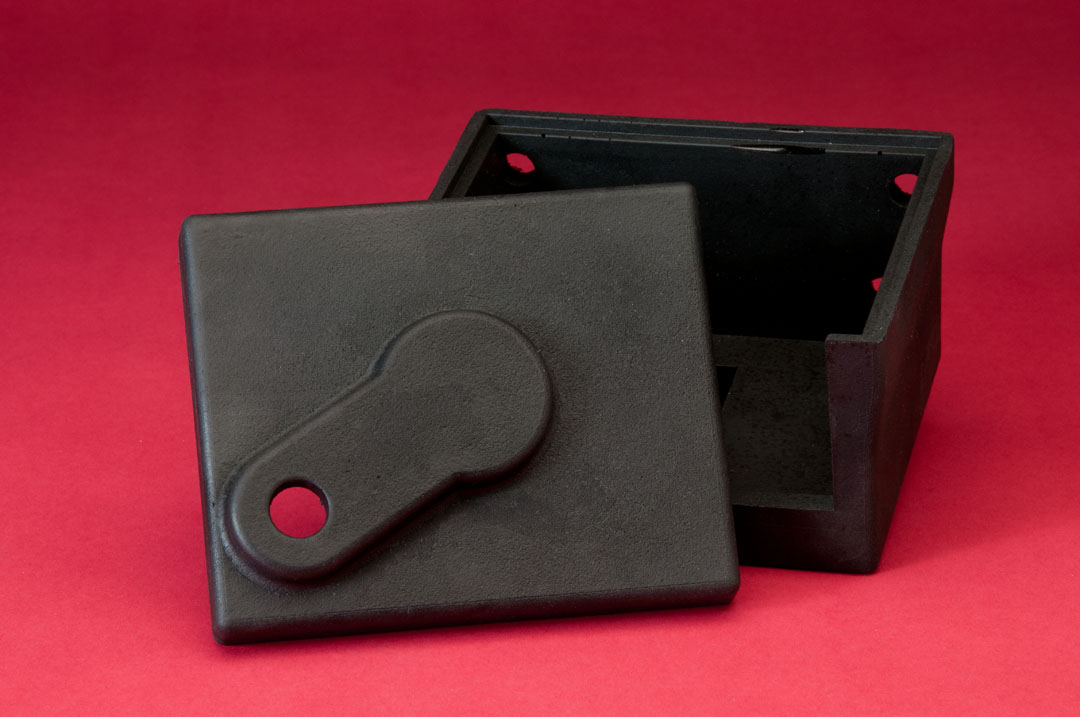
- A proof-of-concept 3D part is created.
- Prototypes are tested in real-world conditions.
- Feedback is incorporated before finalizing the design.
This iterative cycle reduces rework and shortens development timelines. Rather than discovering fit or performance issues late in the process, teams can identify and correct them early, when adjustments are faster and more cost-effective.
Streamlining assembly from prototyping to production
One of the most overlooked benefits of molded foam prototyping is manufacturing ailments.
Because molded parts are designed to fit precisely within assemblies, they eliminate the need for secondary cutting, excessive fasteners, or layered constructions. That streamlined design during prototyping translates directly to:
- Faster production assembly
- Fewer components
- Improved consistency
- Reduced labor variability
By validating these efficiencies early, OEMs can move confidently into full-scale production knowing the prototype reflects real manufacturing conditions.
Accelerating innovation without compromising performance
The pressure to innovate quickly is constant. But speed without validation can lead to costly redesigns.
Custom PMP molded foam provides design forms and OEMs with the flexibility to experiment intelligently. Density can be tuned. Geometry can be refined. Acoustic absorption can be optimized. Thermal resistance can be improved. All within a structured, collaborative prototyping framework.
Instead of viewing acoustic, thermal, and vibration challenges as late-stage obstacles, they become integrated elements of the development process from the beginning.
For OEMs navigating complex environmental demands, molded foam prototyping is more than a material choice; it’s a developing strategy. By combining scientific precision with hands-on collaboration, teams can streamline iterations, reduce risk, and launch products that meet performance expectations the first time.
If you’re ready to reduce development cycles and solve noise, heat, or vibration challenges faster, connect with our PMP experts to start the conversation.