

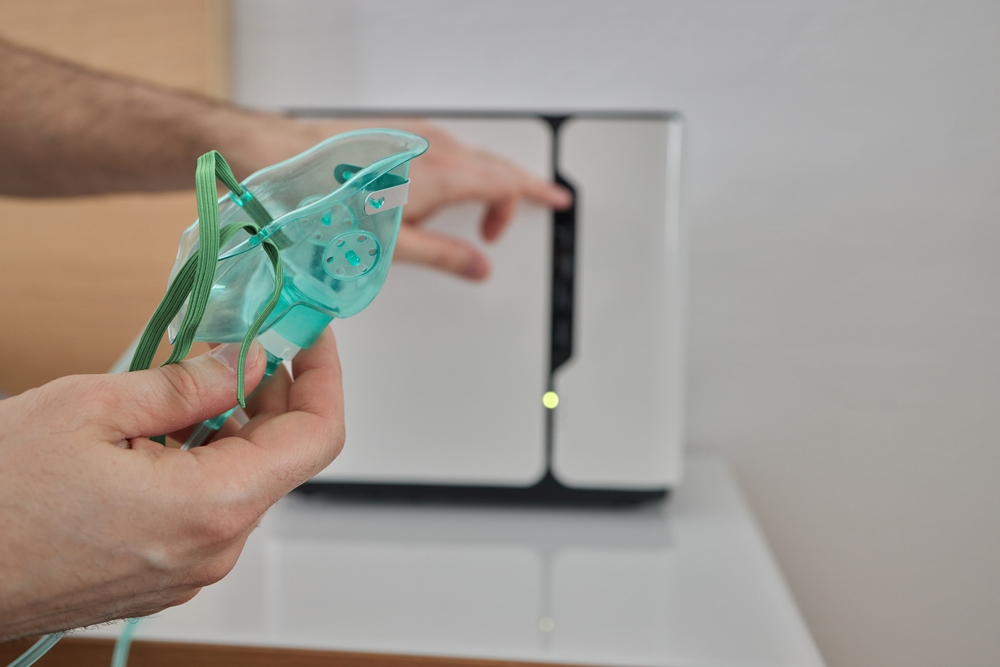
Medical devices are no longer confined to hospitals and clinical settings. As more therapies move into patients’ homes, manufacturers are rethinking how devices are designed for real-world environments. New equipment must deliver the same clinical performance in a much smaller footprint while operating quietly enough to avoid disrupting daily life or interfering with patient comfort.
Meeting those expectations isn’t easy. Compressing powerful components into compact housings creates new acoustic and thermal challenges, and traditional insulation materials often require multiple layers and parts that add complexity without fully addressing noise or heat.
Manufacturers are increasingly turning to advanced engineered foam solutions that can simplify assembly while improving both patient comfort and device performance. In this guide, we’ll explain how by looking at the following:
- Why traditional 2D die-cut materials can create acoustic leaks, thermal hotspots, and assembly line bottlenecks.
- How custom molded foam functions to eliminate noise and heat within a device.
- Real-world examples showing how custom foam solved strict global regulations and reduced assembly times.
- A look at our three-stage framework for collaborating with medical device manufacturers to build a custom molded foam solution.
Engineering challenges for managing noise and heat
Designing acoustic and thermal insulation for a compact medical device using traditional 2D die-cut materials often results in a complex bill of materials. To isolate a motor, seal a fan housing, and line a compact metal or plastic enclosure, engineers may need to specify numerous individual foam components, each serving a single purpose.
This layered approach creates several common engineering challenges:
Acoustic Leakage
Flat insulation cannot conform seamlessly around complex three-dimensional components such as miniature blowers, compressors, or pumps. Even small gaps can create direct paths for high-frequency motor noise to escape, making it difficult to meet increasingly stringent noise targets.
Thermal Management Tradeoffs
Filling tight enclosures with generic foam can unintentionally restrict airflow around heat-generating components. Instead of helping manage temperatures, poorly placed insulation may contribute to localized hot spots that reduce performance and shorten component life.
Assembly Complexity
Multiple die-cut parts increase inventory, handling, and assembly requirements. Operators must accurately position, peel, and apply numerous pressure-sensitive adhesive (PSA) components, which will add labor time and potential human errors.
How Polymer helps medical device engineers think three-dimensionally
Polymer approaches this spatial and environmental puzzle differently through our Molded Products Division (PMP). Rather than treating noise and heat as design afterthoughts and stuffing an enclosure with flat materials, we help OEMs think inside the box by using POLYFORM® custom molded polyurethane foam to keep the noise and heat out.
Cast into precise, complex 3D shapes that mirror the internal design of the device, custom molded foam addresses three critical engineering requirements simultaneously:
- Acoustic Absorption: Because it fully encapsulates the motor or compressor housing, molded foam completely eliminates air gaps, absorbing broadband and structural noise far better than a plastic or metal cover alone.
- Thermal Barriers and Air Pathways: PMP engineers can mold dedicated airflow channels, intake vents, and exhaust paths directly into the foam structure. This isolates intense mechanical heat and guides cooling air pathways precisely across compressors without sacrificing the device’s compact footprint.
- Fewer Parts: Custom molded foam eliminates the need for fasteners, screws, brackets, and adhesives, significantly reducing manufacturing costs and simplifying inventory.
Tailored material formulations for energy management
To meet the strict weight, thermal, and regulatory requirements of the medical field, we have three distinct formulations within the POLYFORM® line:
- POLYFORM® High-Density Molded Foam – Non-Skinned (PHDM-NS): A 10–20 lb/ft³ flexible, high-resilience open-cell foam. Formulated for low emissions, it is uniquely optimized for broadband frequency sound absorption and structural stability inside equipment housings.
- POLYFORM® Low-Density Molded Foam – High Resilient (PLDM-HR): A lightweight 3–6 lb/ft³ open-cell foam engineered for low fatigue loss. It is highly effective at absorbing mid-to-high frequency sound waves while establishing rigorous thermal boundaries to prevent external casing overheating.
- POLYFORM® High-Density Molded Foam – Integral Skin (PHDM-IS): A 10–20 lb/ft³ foam featuring a tough, self-skinning outer layer. This skin provides high tear strength, abrasion resistance, and low water absorption, which is excellent for structural durability or integrated sealing gaskets.
How we solved real-world medical device challenges
Polymer’s work across the medical industry demonstrates how transitioning from passive, flat insulation to a custom molded foam solution addresses performance flaws while optimizing production.
Molded Foam Reduces Noise Produced by Oxygen Concentrator
- The Challenge: Finished production units of a new portable oxygen concentrator faced market rejection due to disruptive noise. Because the production tools were already finalized, an exterior product redesign was impossible, threatening the manufacturer’s timeline to export to the European Union (EU) due to strict European noise compliance laws.
- The Solution: PMP developed a two-piece insert using POLYFORM® PHDM-NS foam that fit seamlessly into the existing unit layout.
- The Results:
Established a snake-like, tortuous path that allowed cooling air to circulate while forcing noise waves to dissipate within the open cells.
Met all strict EU noise level requirements.
Completely replaced expensive, heavy medical-grade stainless steel mounting brackets.
Significantly cut overall production costs without requiring an exterior tooling redesign.
Overall Noise Reduced by 5 dBA for Hospital Bed Mattress Inflator
- The Challenge: Motorized hospital bed mattress inflators emitted an intrusive hum during operation. In-house acoustic testing revealed a loud 56 dBA output with harsh frequency spikes at 315 Hz and severe harmonic peaks at 630 Hz and 1,250 Hz. The existing design required 13 separate internal assembly components, including 10 flat die-cut pieces that required 3 distinct manufacturing dies to produce.
- The Solution: PMP engineered a single, two-piece POLYFORM® molded foam insert set from the PHDM-NS chemistry to totally encapsulate the blower.
- The Results:
Served as the blower’s structural mount, isolating vibration from transferring to the exterior injection-molded plastic housing.
Dropped the overall sound profile by 5 dBA (down to a quieter 50 dBA) and dampened the irritating harmonic spikes.
Reduced total inventory parts from 13 down to just 4.
Slashed production assembly line installation time by 40% due to the streamlined component design.
How we collaborate to build your custom solution
You don’t have to create a new manufacturing process alone. We collaborate directly with your team to engineer out noise, heat, and spatial headaches. We take your project from a rough idea to full-scale production using a streamlined, three-stage framework:
- Ideation: We begin with a face-to-face consultation to evaluate your device’s physical space constraints, target noise thresholds, and supply chain logistics before manufacturing begins.
- Design & Development: We help quantify your design to ensure maximum efficiency, walking through your production process together to uncover assembly challenges that custom molded foam can improve or completely eliminate by removing the need for fasteners, screws, or ties.
- Production: We deploy rapid prototyping techniques, like CNC water-jet cutting or prototype tooling, to validate acoustic and thermal performance inside live machinery before delivering production-ready kits to fit your timeline.
Are you ready to build something quiet and bold?
Integrating acoustic, thermal, and structural controls into early-stage product design allows medical OEMs to break the costly cycle of late-stage redesigns. But wherever you are in your process, our team is ready to help.
Bring us your complex acoustic and thermal problems and let’s engineer a quieter and comfortable environment for your customers together. Contact our technical experts to see how custom 3D molded foam can redefine your next medical device.