

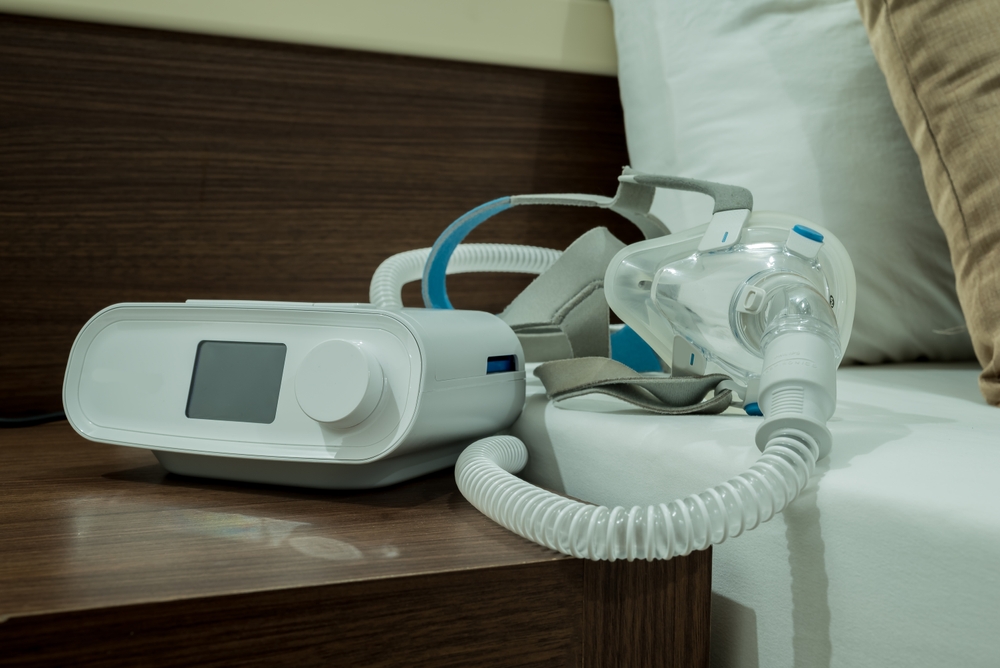
 For CPAP patients, a good night’s sleep is essential. However, the very device designed to aid breathing can be a source of disruptive noise. This illustrates a key challenge for medical device engineers: beyond pure function, devices must be compact, efficient, and user-friendly. Relying on off-the-shelf materials often necessitates difficult compromises among acoustic performance, thermal management, and patient comfort.
Polymer Technologies Inc. collaborates directly with medical OEMs from the outset, engineering custom molded foam solutions tailored to each device’s acoustic, thermal, and spatial needs. This article will take a closer look at where the standard foam options fall short and how Polymer’s collaborative process creates a lasting, more unique solution to all medical OEMs challenges.
Medical Device Design
Designing modern medical devices like surgical smoke evacuators and oxygen concentrators presents a unique trifecta of engineering challenges: acoustic, thermal, and spatial.
These devices must operate quietly to ensure patient comfort and minimize disruption, effectively dissipate heat to prevent overheating and maintain optimal performance, and be compact enough to fit seamlessly into diverse environments, all while meeting stringent safety and efficacy standards.
Acoustic Challenge
Nearly every active medical device generates noise as a natural part of its function, originating from common sources like internal pumps, compressors, motors, or even the sound of turbulent airflow itself. While unavoidable, this acoustic output presents a significant design challenge, as it can have several negative impacts on the end-user and the product’s success:
- Reduced Patient Compliance: A noisy device, particularly one used for oxygen therapy like a portable oxygen concentrator, can be too disruptive for a patient to use consistently, directly impacting the effectiveness of their treatment.
- Negative Perceived Quality: A loud, rattling, or whining device can be perceived by users as being low-quality or poorly engineered, regardless of its medical efficacy. Quiet operation, by contrast, conveys a sense of precision and reliability.
- Poor Overall User Experience: Unwanted noise adds stress and annoyance, detracting from the user’s comfort and well-being, which is the opposite of a therapeutic device’s goal.
Addressing these issues is why investing in advanced medical OEM acoustic solutions is critical for developing a market-leading product.
Thermal & Spatial Challenge
A major trend in healthcare is the increasing demand for smaller, more portable medical devices, which offer greater convenience and point-of-care solutions. However, these compact designs pose significant thermal and spatial challenges for engineers. Miniaturizing high-performance components fundamentally alters the device’s thermal dynamics, leading to two main problems:
- Heat Concentration: With less internal space, heat-generating components (processors, power supplies, motors) are closer together, creating localized “hot spots” and raising the overall internal temperature.
- Restricted Airflow: The compact nature of the design leaves little room for air to circulate, making traditional cooling methods like fans and vents much less effective.
Effectively managing this heat is therefore not just about comfort; it’s a critical requirement for ensuring the device’s long-term performance, reliability, and, most importantly, patient safety.
POLYFORM® Molded Foam Advantage
Choosing a molded foam option for your medical devices could make a significant difference towards the above mentioned challenges. To better understand this we need to look at why the current, standard foam option creates more challenges instead of addressing solutions. Then, we will look at Polymer’s custom molded solution: POLYFORM® from the perspective of how its benefits outweigh those of the current medical device design.
Limitation of Standard Foam
While a simple, die-cut block of generic foam might seem like a straightforward solution for insulation, it is fundamentally inadequate for the complex and precise demands of modern medical devices like surgical smoke evacuators and oxygen concentrators. Its primary failure lies in its inability to perfectly match the intricate internal geometries of these devices, which inevitably creates performance-killing gaps that allow sound and heat to bypass the insulation entirely.
Furthermore, this one-size-fits-all approach is spatially inefficient in a compact design where every millimeter matters, and the foam’s generic properties are often mismatched for the specific acoustic frequencies and thermal loads required. A simple block is also limited to a single purpose, unable to integrate multiple functions—such as shock absorption, vibration damping or airflow channeling—that a custom-engineered part can provide, ultimately proving that the precision of a modern medical device requires a more sophisticated and purpose-built solution.
Key Benefits of POLYFORM®
This is where Polymer Technologies Inc. comes in. Our patented custom molded foam solution known as POLYFORM® is the ideal solution for such complex applications such as surgical smoke evacuators or oxygen concentrators. What exactly sets it apart and why should you want to utilize it instead of a generic piece of foam?
Here are some key benefits to choosing a custom foam solution such as POLYFORM®.
- Precision & Complexity: POLYFORM® molding precisely matches complex internal geometries, creating seamless, 3D parts that eliminate air gaps and effectively manage acoustic and thermal energy.
- Multi-Function Integration: A single POLYFORM® part can integrate multiple functions, acting as an acoustic absorber, thermal insulator, vibration damper, and airflow director, all within a single design with customized features.
- Material Expertise: Our POLYFORM® process, combined with our material expertise, ensures optimal part performance. We help you choose the ideal foam to meet your thermal, acoustic, and fire safety needs.
Real-World Applications: Where Custom Foam Excels
Our collaborative engineering process truly shines in how we tackle complex, real-world problems for our medical OEM partners. By integrating ourselves into the design team rather than simply acting as a component supplier, we craft solutions meticulously designed for the specific needs of each device.
A Breakthrough in Surgical Smoke Evacuator Noise Reduction
Surgical smoke evacuator design faces a key challenge: user disruption from device noise, including pump suction and motor hum. For medical OEMs, quiet operation is crucial for patient compliance. Our collaborative process starts with OEMs providing 3D CAD models and acoustic targets.
We analyze internal geometry and noise frequencies, then collaborate with your engineering team to find the correct custom POLYFORM® molded foam inserts. These engineered acoustic absorbers perfectly line device casings, eliminating gaps. The chosen foam material is tuned to absorb specific high-frequency airflow and motor noises, leading to a near-silent user experience and improved patient compliance.
Optimizing Oxygen Concentrator Insulation
Oxygen concentrators pose a dual challenge: managing the compressor’s powerful, low-frequency noise and significant heat generation. Off-the-shelf solutions often worsen one issue while solving another. We collaborate with our customers to address this integrated thermal and acoustic problem.
By analyzing thermal output, airflow, and acoustic profiles, we collaborate with your team to select the ideal medical device foam and engineer a custom-molded part. This solution reduces compressor noise and provides effective thermal insulation, directing heat away from sensitive components. The result is a more efficient, cool-to-the-touch, and quiet device that enhances patient comfort.
Polymer: Your Partner in Medical Device Innovation
For decades, Polymer has been the choice in custom molded foam solutions. We’ve dedicated time and attention to our process to ensure our customers always receive the best quality foam for their unique challenges. As a collaborative team, we work together from start to finish to ensure that nothing gets lost or misunderstood along the way.
In fact, one of our medical equipment OEMs changed the quality of their products by utilizing our custom foam solutions. Take a look at how our foam helped them, and then contact us to get started on your next custom foam project.