

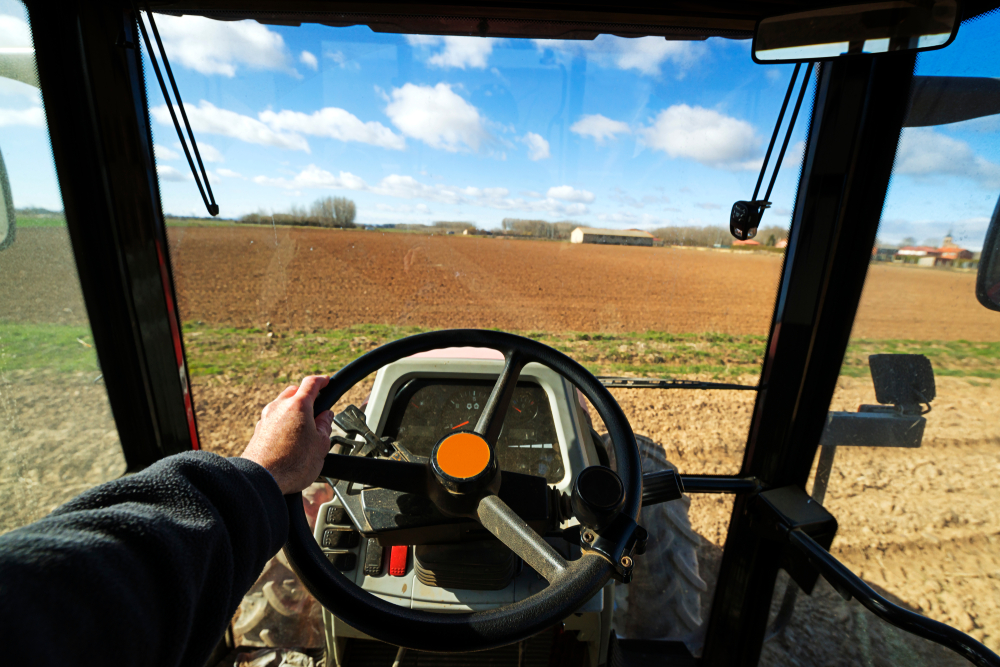
 As the heavy equipment industry moves towards operator-centric design, the internal environment of the cab has become a primary differentiator for Original Equipment Manufacturers (OEMs). For the operator spending ten to twelve hours a day behind the glass, the cab is more than a control center, it is an office. When that office is subject to harsh conditions, there can be lasting negative effects on the operator.
For OEMs, the challenge of noise, vibration, and harshness (NVH) is multi-faceted. Beyond wanting to protect the operator, there are stricter standards and ISO requirements regarding decibel exposure. A loud machine is increasingly seen as an inefficient one, signalling a lack of refinement that can hurt resale value and brand reputation.
In this article we will break down the following:
- How NVH challenges can affect the performance and longevity of heavy equipment.
- Strategies to help regulate sound, vibration, and thermal issues within equipment cabs.
- Why Polymer is the choice in foam solutions for OEMs to enhance their equipments’ cab environments.
Understanding the NVH challenges in heavy equipment
To solve the noise problem, we first have to look at its two distinct forms.
- Airborne Noise – This is the direct sound from the engine or cooling fans traveling through the air.
- Structure-born Noise – This occurs when the metal chassis vibrates, essentially turning the entire cab into a giant speaker.
In a glass-heavy tractor or construction vehicle cab, these acoustic challenges are often compounded by thermal regulation issues. Large windows create the “greenhouse effect,” making temperature control just as vital as noise control.
Failing to manage these elements isn’t just a comfort issue, it’s a compliance one. With strict OSHA and ISO standards governing operator noise exposure, an uninsulated cab is a liability.
Strategy 1: Sound absorption for airborne noise
The first line of defense is reducing the energy of sound waves bouncing within the engine compartment or the cab itself. Polymer’s POLYDAMP® Acoustical Foams (PAF) are engineered specifically for this task.
As a high-performance polyether or polyester polyurethane foam, POLYDAMP® works through an intricate open-cell structure. When sound waves enter the foam, they are forced through a labyrinth of cells, where friction converts the acoustic energy into a negligible amount of heat. This is particularly effective for managing the mid-to-high frequency “whine” of hydraulic systems and cooling fans.
Because engine bays are messy, high-heat environments, POLYDAMP® can be customized with various facings, such as reinforced aluminized polyester or urethane. These facings protect the foam from oil and fuel while reflecting radiant heat, ensuring the material remains effective for the entire lifespan of the machine.
While flat sheets work for large areas, modern engine compartments’ complex geometries demand a tailored approach. POLYFORM™ molded foams are essential, custom-molded to the engine bay’s three-dimensional contours. This traps noise at the source, eliminating gaps and ensuring maximum absorption in tight mechanical spaces before noise reaches the cab.
Strategy 2: Sound transmission loss
While absorption cleans up existing noise, transmission loss focuses on preventing noise from entering the cab in the first place. This is when it is wise to utilize a POLYDAMP® Acoustical Barrier.
Unlike simple foam, this uses a decoupled barrier design. We sandwich a high-density septum (typically mass-loaded vinyl) between layers of foam. The foam acts as a spring, while the heavy septum blocks the low-frequency drone of the engine that other light weight materials can’t stop.
When applied to floor mats and firewalls, this barrier creates a literal wall of silence between the operator and the drivetrain.
However, even the most advanced barrier is only as strong as its tightest seal. Acoustic leaks, small gaps around steering columns, pedals, and wire harnesses, can allow significant engine noise to bypass insulation. To solve this, Polymer provides custom molded close-outs designed to hermetically seal these penetrations.
Strategy 3: Vibration damping and isolation
A cab can be perfectly sealed, but if the floorboards are vibrating, the operator will still feel the strain. The goal here is to stop the ringing of large metal panels.
POLYDAMP® Extensional Damping Pads (EDP) are visco-elastic materials applied directly to the metal skin of the machine. These pads work through a process called mechanical hysteresis. As the metal tries to vibrate, the pad stretches and compresses, converting that mechanical energy into low-grade heat.
Ultimately, this eliminates the tinny feel of the cab and reduces structural fatigue on the machine as a whole. These pads provide a much more solid and premium operator experience.
Strategy 4: Thermal management for operator comfort
A comfortable operator is a productive operator. Keeping the cab cool in the summer and warm in the winter requires high-performance insulation that doesn’t add significant weight.
POLYDAMP® Melamine Foam (PMF) is the gold standard for this dual-purpose role. It is exceptionally lightweight and boasts world-class fire safety ratings, making it ideal for overhead liners and side panels.
PMF serves as a high-performance thermal insulator while simultaneously acting as an acoustic absorber, solving two major engineering hurdles with a single material.
Strategy 5: Ergonomics and Passive Safety
A truly operator-centric cab must prioritize more than just what the driver hears; it must also consider physical interaction and safety. Beyond NVH and thermal management, Polymer’s expertise includes ergonomic overmolded cushions and energy-absorbing crashpads.
These components reduce physical strain during long shifts and provide critical impact protection in the event of a collision or rollover. By integrating these safety features directly into the cab’s interior design, OEMs can provide a premium environment that protects the operator’s long-term health and well-being.
Why OEMs partner with Polymer
Choosing the right material is only half the battle. You also have to consider integration. Polymer offers comprehensive custom fabrication services, ranging from CNC waterjet cutting of flat goods to advanced 3D molding for complex geometries.
Our ability to provide peel-and-stick components alongside molded ergonomic solutions means your assembly line receives a complete, integrated kit ready for immediate installation; reducing labor costs. Our materials are rigorously tested for UV, moisture, and chemical resistance, ensuring they perform in the elements of the real world.
In an industry where margins are tight and operator retention is critical, a quiet, climate-controlled cab is a major competitive advantage. Superior NVH control translates directly to higher machine resale value and reduced operator fatigue. Trusting in the expertise of Polymer’s solutions ensures OEMs maintain a brand reputation they can be proud of.
Ready to quiet your next project? Contact Polymer’s engineering team for a custom material analysis and see how our POLYDAMP® foam and barrier options can solve your noise and vibration challenges.