

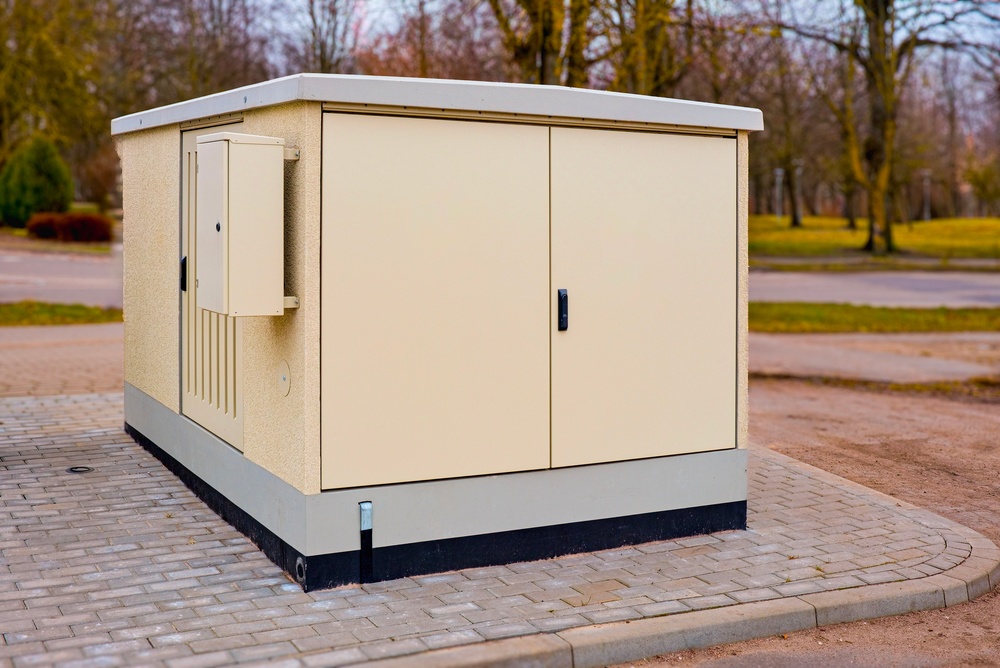
Many commercial generators are installed outdoors to reduce installation costs, simplify maintenance, improve regulatory compliance, and limit exposure to noise and exhaust. In remote locations and construction environments, outdoor placement is often the only practical option.
While this approach offers some advantages, it also exposes generators to rain, snow, wind, and other environmental risk factors that can impact performance and longevity. To mitigate these risks, outdoor generators are typically housed in enclosures designed to protect against the elements.
However, standard enclosures alone are rarely sufficient. While they offer some defense against weather, noise, and heat, they often fall short in fully managing the combined challenges of environmental exposure, acoustic control, and thermal regulation.
In our previous look at Insulation Materials for Generator Enclosures, we discussed the quieter foam alternatives for legacy materials and this need is even more crucial outdoors. To ensure longevity and regulatory compliance, engineers must take a precise approach to weatherproofing to get the most out of their equipment and prevent costly acoustic and thermal issues.
In this article, we’ll focus on the following topics to address issues concerning outdoor power generator enclosures:
- How noise, thermal cycling, and moisture compromise standard enclosures.
- Ways hydrophobic melamine and closed-cell foams outperform mineral wool and other legacy materials.
- How advanced insulation reduces labor costs and extends equipment lifespan.
What energy management challenges impact generator performance?
Outdoor generator enclosures must shield equipment from the elements while managing noise, heat, and moisture. Standard designs often fall short, leading to three critical performance challenges that impact reliability, compliance, and longevity.
1. Structural and Airborne Noise
Excessive noise from outdoor generators can lead to regulatory violations, community complaints, and forced shutdowns. While enclosures are designed to contain sound, their construction often creates acoustic weaknesses.
Common issues include:
- Internal sound reflection: Metal panels reflect sound waves, creating a reverberant field that reduces overall attenuation.
- Noise leakage through openings: Cooling intake and exhaust louvers act as direct escape paths for sound energy.
- Structure-borne vibration: Mechanical energy transfers into the enclosure frame, causing metal panels to vibrate and radiate low-frequency noise over long distances.
2. Thermal Load Instability and Solar Gain
Maintaining stable internal temperatures is a persistent challenge for outdoor systems. Enclosures must handle both internal heat generation and external environmental changes.
Key thermal risks include:
- Solar heat gain: Direct sunlight increases enclosure surface temperature, especially on darker finishes, adding heat before operation even begins.
- Increased cooling demand: Higher baseline temperatures place additional strain on cooling systems and can contribute to reduced efficiency or engine derating.
- Condensation from temperature swings: When warm, humid air contacts cooler internal surfaces, it can reach its dew point and form moisture.
- Component exposure: Condensation can accumulate on alternators and control systems, increasing the risk of corrosion and electrical faults.
3. Material Degradation from Moisture and Vibration
Traditional insulation materials, such as fiberglass and mineral wool, are widely used, but they are not designed for high-vibration, moisture-prone environments.
Common failures include:
- Moisture absorption and retention: Fibrous materials can absorb and hold moisture when exposed to humidity, condensation, or water ingress.
- Loss of performance: Saturated materials experience reduced acoustic absorption and diminished thermal effectiveness.
- Corrosion risk: Trapped moisture can accelerate the degradation of surrounding metal components.
- Adhesive breakdown: Thermal cycling and vibration weaken standard bonding methods, especially when materials expand and contract at different rates.
- Material delamination: Over time, insulation can detach from enclosure surfaces, reducing effectiveness and creating mechanical or safety risks.
How Polymer’s advanced foam materials address these challenges
At Polymer Technologies, Inc., we help engineers insulate enclosure systems to minimize the impact of outdoor conditions while maintaining performance, safety, and reliability. By combining specialized materials into a layered approach, each component addresses a specific energy management challenge.
Advanced Acoustic Absorption
The primary defense against airborne noise is POLYDAMP Hydrophobic Melamine (PHM) Foam.
Built for Moisture
PHM delivers the acoustic and fire performance of standard melamine foam, with a hydrophobic treatment that resists moisture absorption. This allows it to maintain performance in environments exposed to humidity, rain, or snow.
Performance
PHM provides excellent high-frequency sound absorption while remaining extremely lightweight.
Installation Points
- Intake and exhaust plenums, where airflow is required but noise must be controlled
- Interior surfaces such as service doors, where it helps reduce reflected engine noise
High-Performance Acoustic Barriers
Absorption reduces reflected noise, but controlling sound transmission requires mass. POLYDAMP Acoustical Barriers (PAB) provide that layer of defense.
Mass-Loaded Performance
These high-density barriers limit sound transmission through enclosure walls by adding mass to the system.
Vibration Control
In addition to blocking airborne noise, barriers can help reduce panel vibration, contributing to lower radiated noise from the enclosure structure.
Installation Points
- Composite wall systems combining absorption and barrier layers
- Main enclosure panels where sound containment is critical
Closed-Cell Thermal Insulation
While PHM manages airborne noise, controlling heat and moisture requires a different approach. POLYDAMP® Low-FS Closed Cell Foam (PLFS-CC) provides the environmental sealing layer within the system.
Moisture and Thermal Control
Closed-cell construction resists water absorption and helps prevent warm internal air from contacting cooler metal surfaces, reducing the risk of condensation.
Safety Performance
These materials meet ASTM E-84 (25/50) requirements for flame spread and smoke development.
Installation Points
- Interior walls and ceiling panels as part of a multi-layer system
- Access doors and hatches, where the material can also function as a thermal gasket
Facings and Adhesives
System performance depends not only on material selection, but also on protection and attachment methods that really stick.
Foil facings help protect insulation from oil, fuel, and environmental contaminants while contributing to reduced radiant heat transfer.
High-Performance Adhesives (PSA)
Polymer’s pressure-sensitive adhesives are designed to withstand temperature fluctuations and vibration. In many applications, they eliminate the need for mechanical fastening methods such as stud welding.
Installation Points
- Across interior surfaces to protect and extend material life
- In bonded systems where durability and cleanability are required
Engineering for the elements with Polymer
Don’t let the elements limit your generator’s performance. Polymer Technologies delivers engineered solutions that help OEMs tackle complex acoustic and thermal challenges. We specialize in advanced foam materials, including PHM and PLFS-CC, that mitigate the issue at the source. We also offer custom molded foam solutions for the most unique applications. Whatever your specific need, contact our team today to protect your equipment and maximize performance.